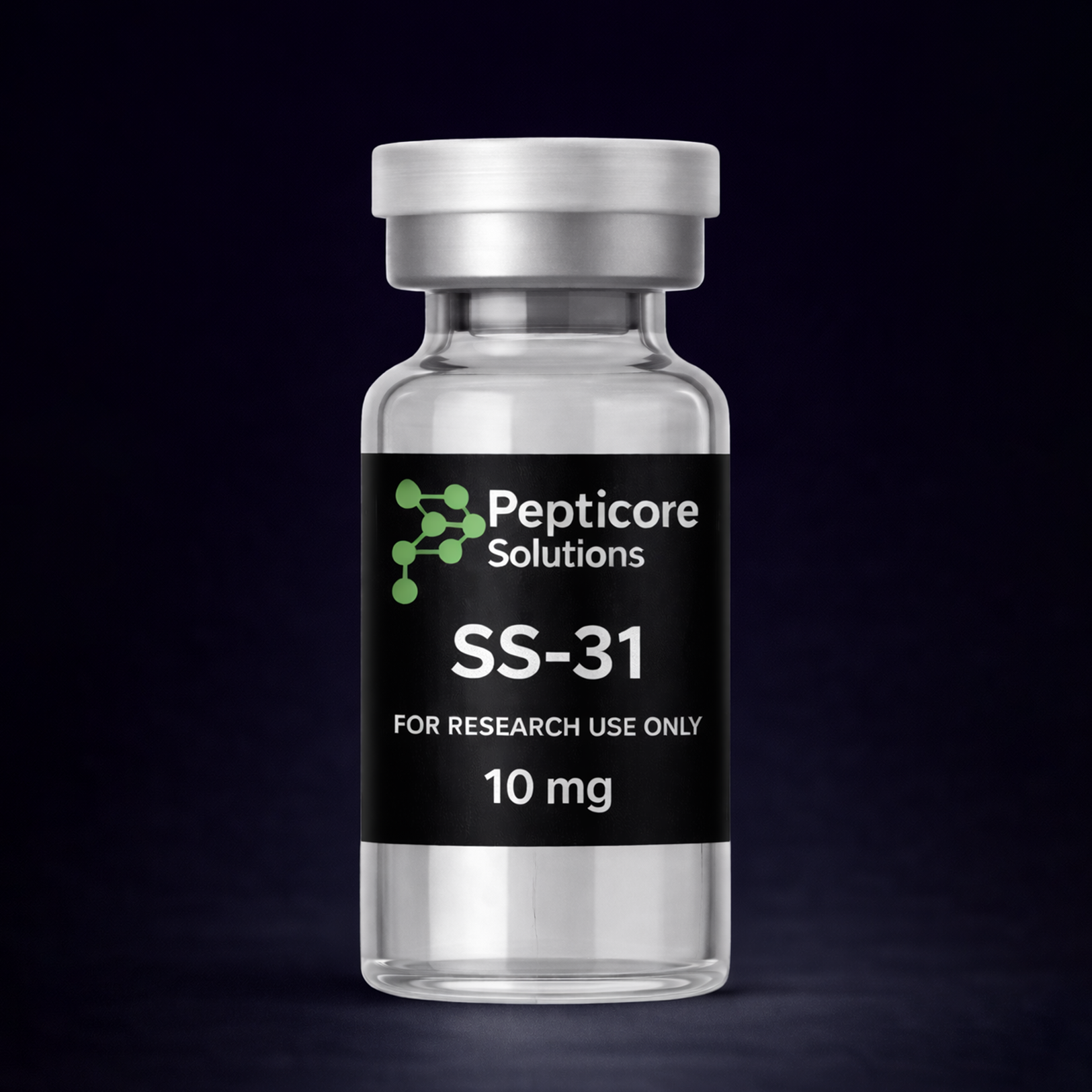
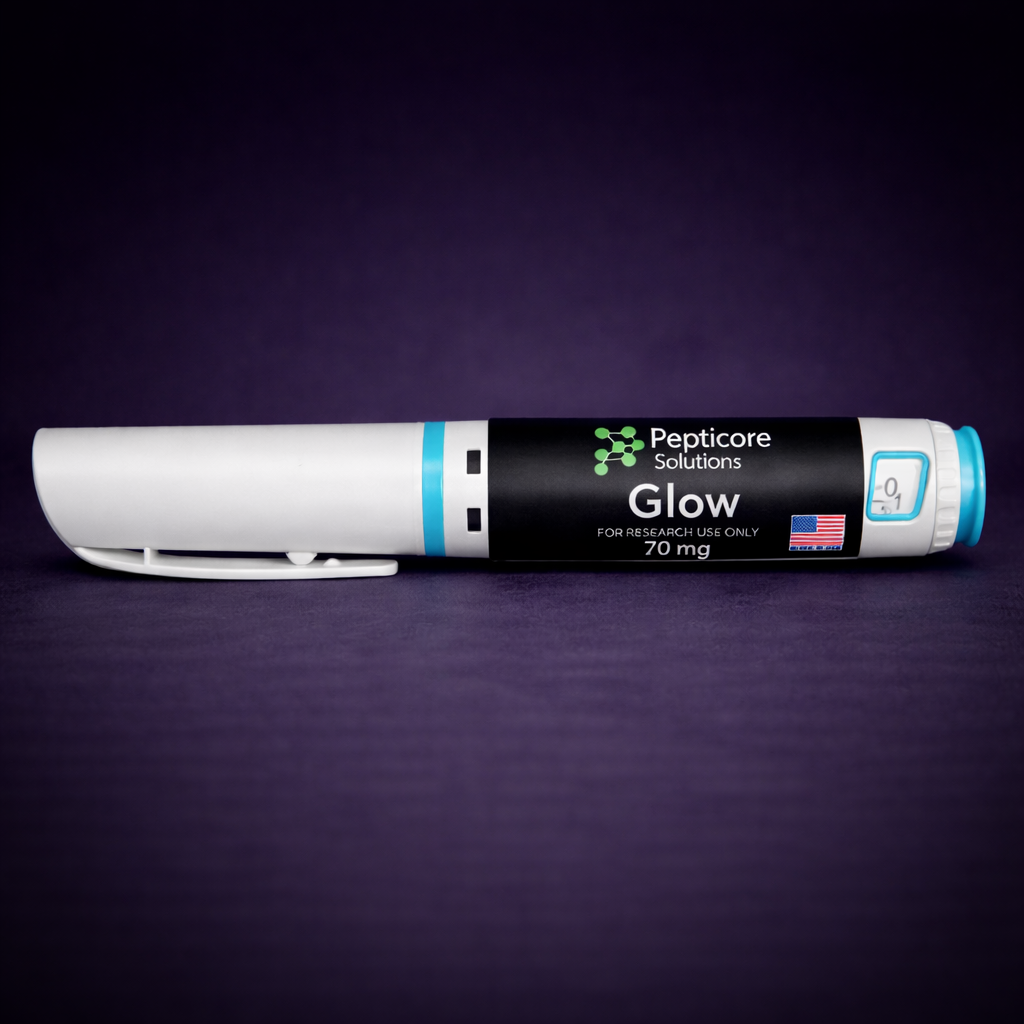
SS-31 (Elamipretide) is a synthetic tetrapeptide engineered to target the inner mitochondrial membrane and scavenge reactive oxygen species. Widely used in cell and tissue models, SS-31 supports studies of mitochondrial bioenergetics, oxidative-stress mitigation, and cell survival signaling. Each lot is produced under ISO-certified conditions, confirmed ≥99% purity by HPLC, screened for endotoxin (<0.1 EU/mg), and shipped with a full Certificate of Analysis

SS-31 (Elamipretide)
$60.00 – $135.00Price range: $60.00 through $135.00
| Weight | 0.011 lbs |
|---|---|
| Dimensions | 1.25 × 0.75 × 0.75 in |
| Dose | 10mg, 25mg |
Mitochondrial ROS Scavenging
SS-31 localizes to the inner mitochondrial membrane and neutralizes superoxide and hydroxyl radicals, modeling oxidative-stress reduction in cell assays.
Enhanced Al P Production
In isolated mitochondrial preparations, SS-31 preserves electron-transport efficiency and increases ATP yield under stress conditions.
Membrane Stabilization
SS-31 interacts with cardiolipin to maintain cristae structure, supporting studies of mitochondrial integrity in ischemia–reperfusion models.
Anti-Apoptotic Signaling
In neuronal and cardiomyocyte cultures, SS-31 reduces cytochrome-c release and caspase-3 activation, providing a tool for apoptosis-pathway research.
Inflammation & Cytokine Modulation
Preclinical tissue models show SS-31 lowers pro-inflammatory markers (IL-1β, TNF-α), enabling exploration of mitochondrial-linked immune responses.
Lab-Grade Handling & Stability
Reconstitute SS-31 in SWFI or BAC water, store lyophilized at –20 °C, and keep reconstituted solutions at 2–8 °C for up to 7 days with ≥98% peptide integrity.
What Is SS-31?
SS-31, also known as Elamipretide, is a cell-permeable tetrapeptide (D-Arg-Dmt-Lys-Phe-NHâ‚‚) designed to selectively bind cardiolipin in the inner mitochondrial membrane. In research models, SS-31 is used to probe mitochondrial function, oxidative-stress pathways, and energy-production mechanisms under conditions of metabolic or ischemic challenge.
Why Choose SS-31?
Researchers choose SS-31 for its unparalleled ability to concentrate in mitochondria and neutralize reactive oxygen species at the site of production. Its robust preservation of electron-transport chain efficiency translates into higher ATP levels and reduced apoptotic signaling in diverse cell types. Manufactured under cGMP-like, ISO-certified conditions, every SS-31 batch delivers consistent performance, backed by rigorous HPLC purity testing and endotoxin screening for reliable protocol integration.
What is SS-31 (Elamipretide) peptide?
SS-31 is a synthetic tetrapeptide (D-Arg-Dmt-Lys-Phe-NHâ‚‚) designed to target the inner mitochondrial membrane and scavenge reactive oxygen species in research models.
How does SS-31 protect mitochondria?
By binding cardiolipin, SS-31 stabilizes mitochondrial cristae architecture and neutralizes superoxide and hydroxyl radicals at the source of oxidative stress.
What research applications use SS-31?
SS-31 is used in assays of mitochondrial bioenergetics, oxidative-stress mitigation, apoptosis pathways, and ischemia–reperfusion injury models.
How is SS-31 reconstituted for lab studies?
Reconstitute SS-31 in Sterile Water for Injection (SWFI) or Bacteriostatic Water (BAC) and follow your lab’s SOP for final concentration.
What is the recommended storage for SS-31?
Store lyophilized SS-31 at –20 °C; reconstituted solutions remain stable at 2–8 °C for up to 7 days without significant degradation.
Does SS-31 affect ATP production?
Yes—SS-31 preserves electron-transport efficiency under stress, resulting in higher ATP yield in isolated mitochondrial and cell-based assays.
Can SS-31 be combined with other peptides?
Researchers often co-study SS-31 with antioxidants or anti-inflammatory peptides (e.g., AHK-Cu, BPC-157) to explore synergistic cytoprotection.
Is SS-31 approved for human use?
\No. SS-31 is strictly for laboratory research only and is not approved for therapeutic or veterinary application.
What concentrations are typical for SS-31 in cell culture?
In vitro experiments commonly use SS-31 at 0.1–10 µM, depending on cell type and assay endpoints.